A finished basement has the potential to become one of the most versatile spaces in your home. It can serve as a family gathering area, a guest suite, a home gym, or a quiet retreat. However, one decision that has an outsized impact on how that space feels and performs is the flooring. Selecting flooring for a basement remodel requires a different level of consideration than choosing flooring for a main level kitchen or living room. Below grade environments behave differently, and the materials used in these spaces must be chosen with long term performance in mind.
Our clients often weigh the same small group of flooring materials when considering basement design options: carpet, luxury vinyl plank, tile, and epoxy. Each offers distinct advantages depending on your goals and lifestyle. Understanding how they differ can help clarify which one fits your space best.
Comparing the Most Common Basement Flooring Materials
Carpet
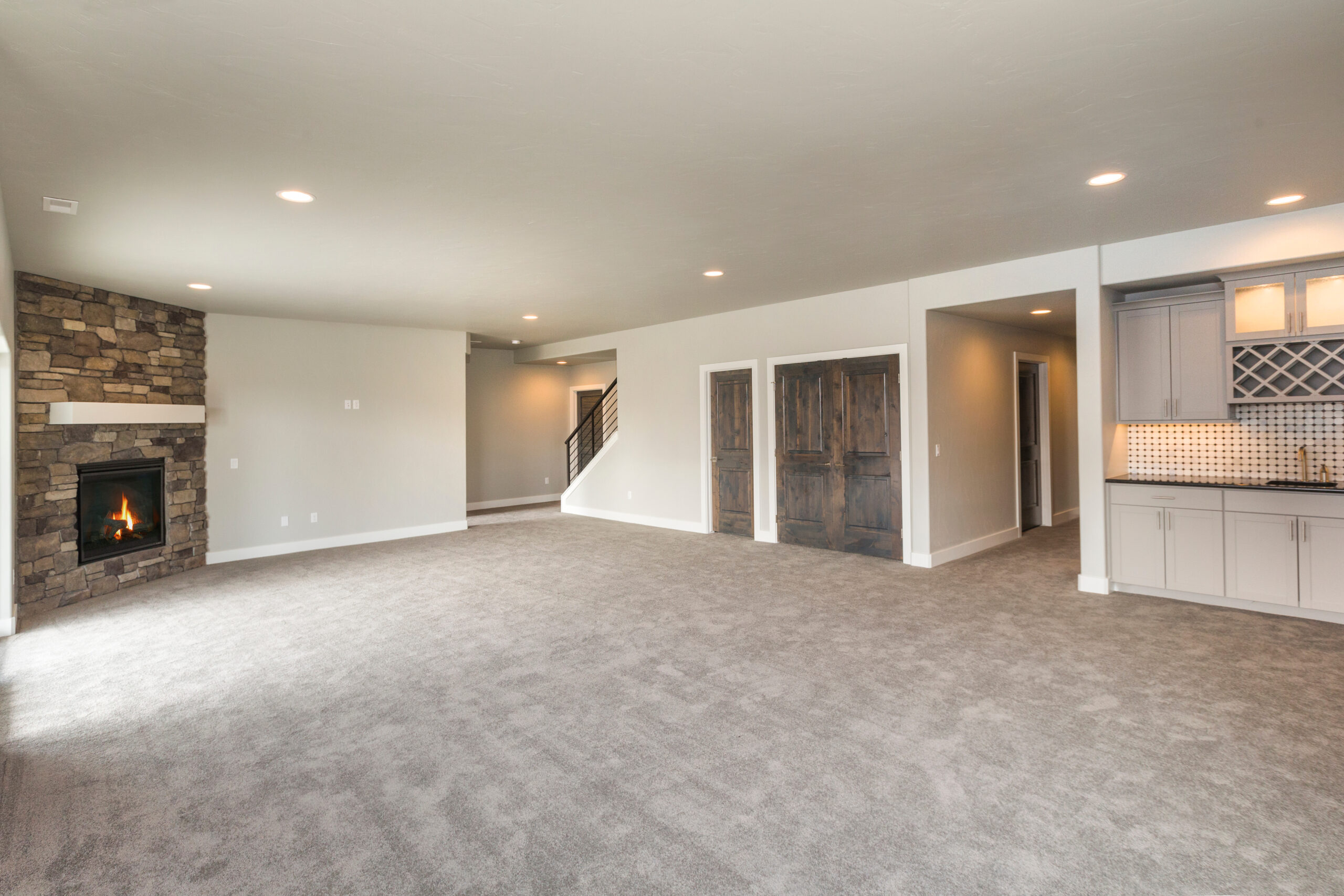
Because basements naturally run cooler than upper levels, carpet can dramatically shift how the space feels from the moment you walk downstairs. Hard surfaces tend to emphasize the temperature difference, while carpet immediately adds warmth underfoot and softens the overall atmosphere. For homeowners who envision their basement as a place to unwind, gather, or spend extended time with family, that warmth makes a noticeable difference in how the space is experienced day-to-day.
Carpet performs especially well in family rooms, basement bedrooms, and media spaces where relaxation and acoustics matter. It absorbs sound, reduces echo in open layouts, and contributes to a quieter, more comfortable environment. In homes with children, it also provides a softer surface for play and everyday use. However, carpet does require thoughtful consideration in a basement setting. In the event of water intrusion or flooding, carpet and pad can be more vulnerable than hard surface alternatives and may require replacement. For homes with a history of moisture issues, that risk should be weighed carefully. Proper slab evaluation, drainage planning, and moisture mitigation are essential before installation to protect long term performance. When installed in the right environment, carpet can bring a sense of warmth and comfort that shapes the entire character of the basement.
Related: 7 Basement Remodel Ideas That Add Space and Style
Luxury Vinyl Plank
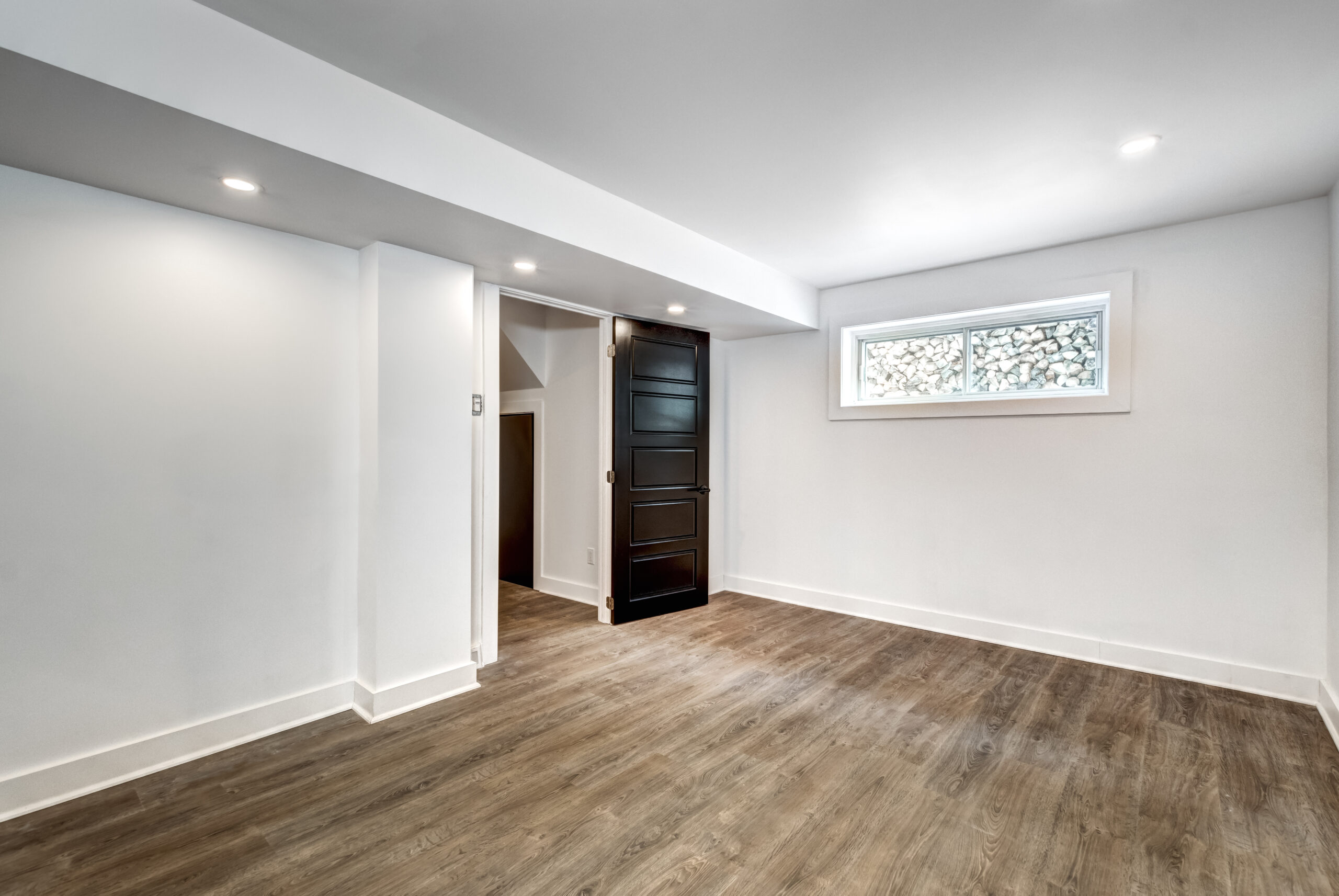
Luxury Vinyl Plank, often referred to as LVP, has become one of the most popular basement flooring options for good reason. It offers the visual warmth of hardwood while delivering the moisture resistance that basements demand. For homeowners who want a finished, cohesive look that flows well with upper levels but still performs reliably below grade, LVP strikes a practical balance.
Modern LVP products are engineered to handle everyday wear, making them well suited for multi-use basements that include workout areas, guest spaces, children’s play zones, or secondary living rooms. Many options are waterproof or highly water resistant, which provides peace of mind in environments where minor moisture fluctuations can occur. Installation systems have also improved significantly, allowing for stable performance over properly prepared concrete slabs.
That said, LVP is not indestructible. While it resists moisture better than carpet or traditional hardwood, it can still be susceptible to surface scratching from heavy furniture, pet claws, or sharp debris. Lower quality products may also feel hollow underfoot or show repetitive patterning if not selected carefully. Additionally, because it is a floating system in many applications, subfloor preparation is critical. Any imperfections in the slab can telegraph through over time. When a high-quality product is selected and installed correctly, however, LVP offers a versatile solution that balances durability, aesthetics, and practicality in a basement remodel.
Tile
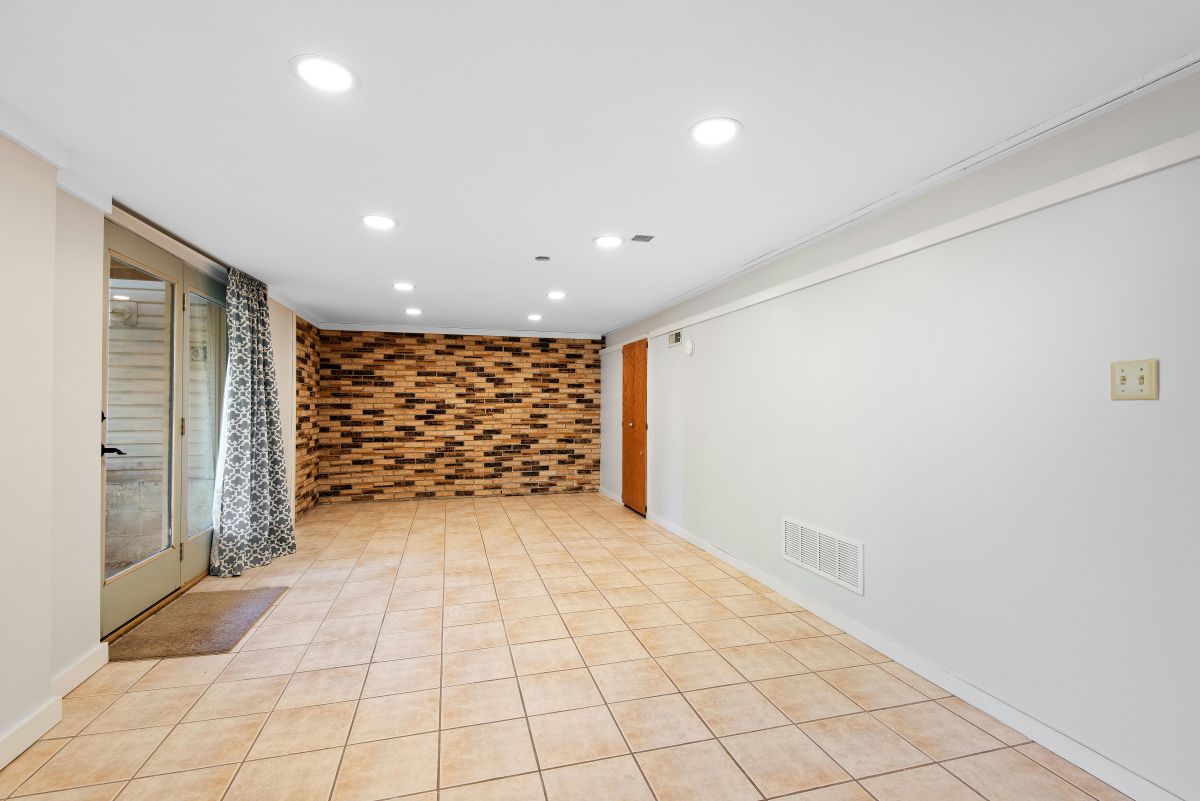
Tile is a strong option for basement remodels, particularly because it performs well over concrete slabs and handles moisture reliably. Porcelain tile is especially durable and well suited for basements that include home gyms, bathrooms, bar areas, or high traffic entertaining spaces. Large format tiles can make the basement feel expansive and intentional, while textured or patterned options can introduce visual interest and elevate the overall design.
However, tile is a firm surface and does not offer the warmth or acoustic softness of carpet. It can feel cooler underfoot, especially during winter months, and grout selection plays an important role in long term appearance and maintenance. When properly installed and thoughtfully selected, tile provides a durable, low maintenance foundation that works well in basements designed for performance and longevity.
Epoxy
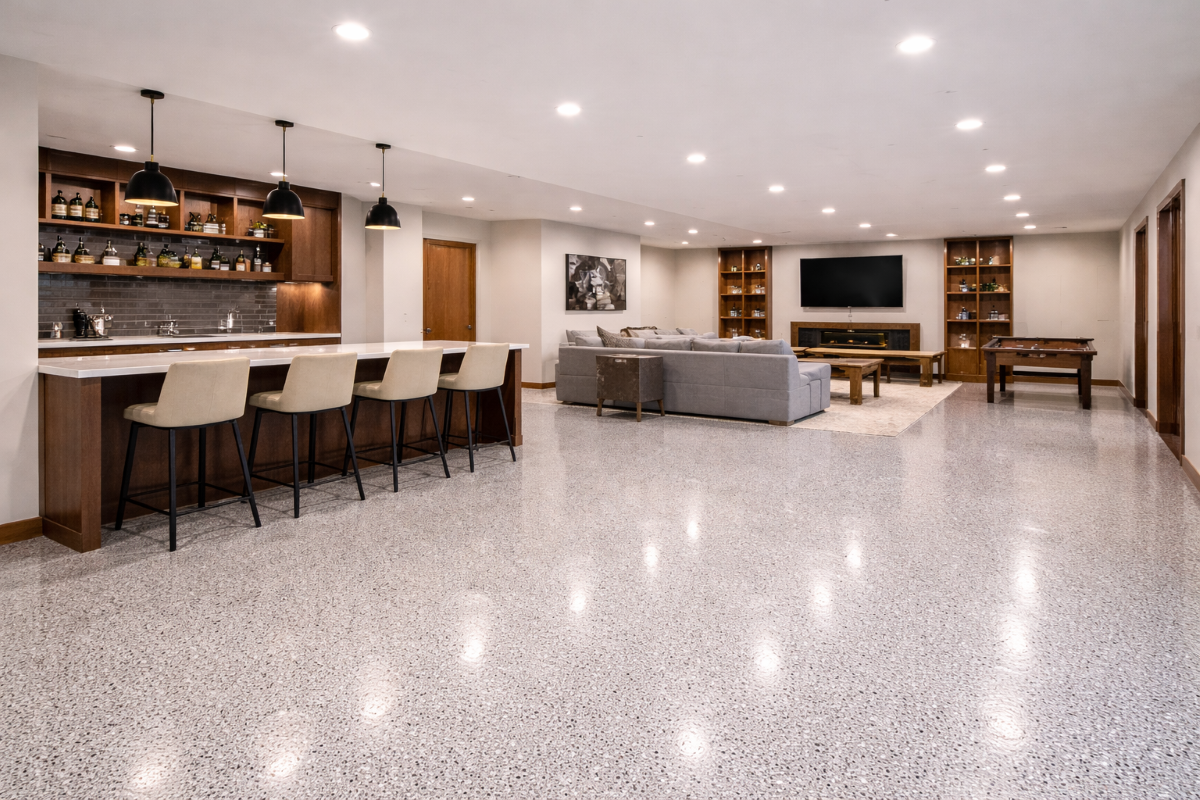
Epoxy flooring has evolved far beyond its early association with garages and utility rooms. In today’s residential remodels, it can be a deliberate design choice that delivers a seamless, polished aesthetic with exceptional durability. For homeowners who envision their basement as a modern entertaining space, a game room, a home gym, or even a sleek bar area, epoxy creates a clean foundation that feels intentional and cohesive. Its continuous surface eliminates grout lines and seams, which not only simplifies maintenance but also reinforces a streamlined, architectural look that pairs well with contemporary lighting, custom millwork, and statement features.
At the same time, epoxy is not universally suited for every lifestyle. Because it is installed directly over concrete, it remains a firm surface and does not provide the warmth or acoustic softness of carpet. It can also feel cooler underfoot during winter months. While it performs exceptionally well against spills and heavy use, any natural slab movement over time may become visible through the coating, and localized repairs can sometimes show depending on the finish selected. For homeowners drawn to a bold, modern aesthetic and a surface designed to handle entertaining, equipment, or high activity, epoxy offers a distinctive and elevated option when incorporated thoughtfully into the overall basement design.
How Much Does a Basement Remodel Cost in the Twin Cities?
Planning Your Basement Remodel
Flooring plays a major role in how your basement feels and functions. Choosing the right material early in the design process helps shape the layout, lighting, and overall aesthetic of the space. If you are planning a basement remodel in the Twin Cities area, working with an experienced home remodeling contractor ensures your flooring selection aligns with both performance needs and long-term goals. At Homecare Remodeling, we focus on delivering basement remodels that are carefully structured, detail driven, and tailored to your lifestyle.
When you are ready to explore your options, our team can help you evaluate what will work best for your space and guide you through a remodeling process that feels organized from start to finish.
Founded in 1960, Homecare Remodeling offers high-quality renovation and construction services. Our skilled team specializes in custom designs for projects of all sizes, from exterior remodeling to kitchen and bathroom remodels and complete renovations. We are committed to exceptional craftsmanship, transparency, and customer service and are dedicated to bringing our clients’ visions to life.